Plein Watt Moto / Comparisons
Talaria Sting Pro vs. E Ride Pro SR: Make the Specs Useful
Checked
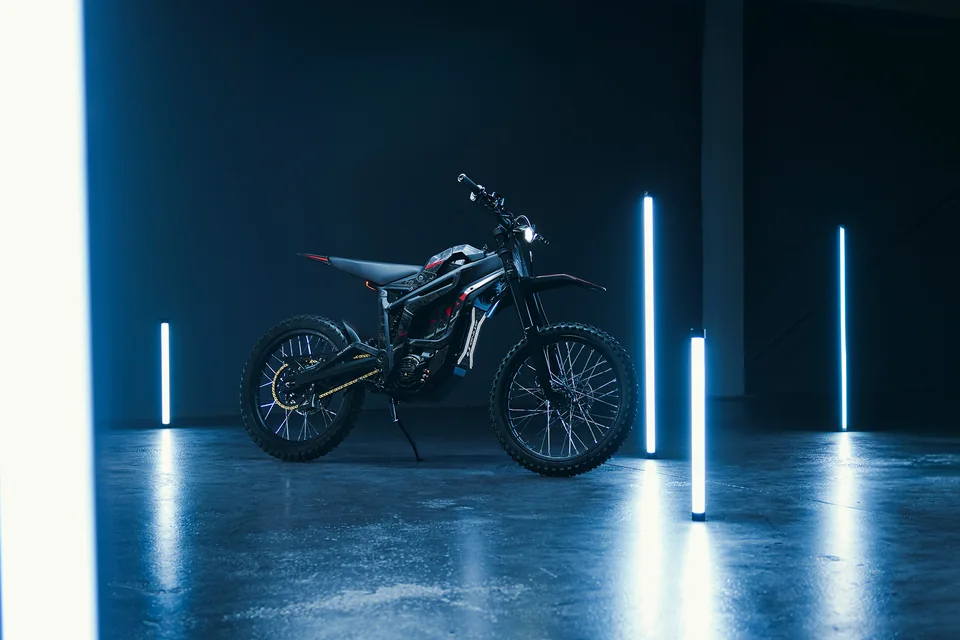
TL5500 and Pro SR 2025: compare claimed power, battery energy, and support, with the Sur-Ron Light Bee 2 as another option.
The key specifications
On mobile, scroll the table horizontally.
| Criterion | Talaria Sting Pro TL5500 | E Ride Pro SR |
|---|---|---|
| Version / market | UK distributor specification | 2025 · United States |
| Advertised output | 13 kW | 25 kW |
| Battery | 72 V · 40 Ah | 72 V · 50 Ah |
| Nominal energy | 2.88 kWh* | 3.60 kWh* |
| Claimed weight | Not specified by this source | ≈ 83 kg |
| Seat height | Not specified by this source | 830 mm |
| Front / rear wheels (inches) | 19 / 19 | 19 / 18 or 19 / 16 by version |
| Useful detail | Gearbox transmission, inverted fork | Removable Samsung 50S battery |
| Reference specification | Talaria UK — Sting Pro TL5500 | E Ride Pro — Pro SR (2025) |
A brand name is not enough
Talaria versus E Ride Pro comparisons often mix several motorcycles. Here, Talaria means the UK-listed Sting Pro TL5500, and E Ride means the U.S.-listed Pro SR 2025. A video comparing an SS 3.0 and MX5 may be useful, but it is not a test of these exact two versions.
Identifying versions matters when distributors use different names in different countries. Request written specifications for the delivered bike: battery, controller, wheels, model year, and any road-approval documents.
Two differences with different meanings
This Talaria lists 13 kW peak, compared with 25 kW for the SR. That difference describes advertised maximum output, not ease of learning, traction, or how long peak power remains available. A new rider may benefit more from progressive response and a suitable size.
Both batteries are listed at 72 V, with 40 Ah for Talaria and 50 Ah for the SR. Calculated nominal energy is 2.88 and 3.60 kWh respectively: 25% more for the SR. That percentage concerns nominal energy. It does not automatically mean 25% more distance. Consumption, weight, and riding conditions still matter.
What the documents cannot decide
The selected Talaria page does not provide a weight figure we can use here. We leave that information open. Taking a weight from another generation and calculating a highly precise power-to-weight ratio would mislead readers.
Specifications also do not identify your nearest capable workshop or a replacement part’s lead time. Ask who handles support, how diagnosis works, and which conditions apply to claims. The quality of those answers helps compare the service offered with each bike.
Where does the Sur-Ron Light Bee 2 fit?
The Light Bee 2 is a third option if you prioritize a compact motorcycle with claimed weight around 65 kg and 24 kW in Turbo mode. Apply the same checks: ergonomics, delivered specification, and local support. Our two dedicated comparisons explain its differences separately.
To decide, narrow the list to two models and compare quotes, riding position, and your intended riding location. Watching more videos about different generations can create confusion rather than clarity. A precise comparison is more useful than a context-free brand ranking.
Sources and method
A documentary story. Sources for this issue were consulted September 18–19, 2026. Interpretations are editorial; cited creator tests are attributed to their authors. Plein Watt Moto does not claim to have conducted riding tests.
Watch on YouTube
Third-party videos · In English · Shown versions may differ from the specifications compared.
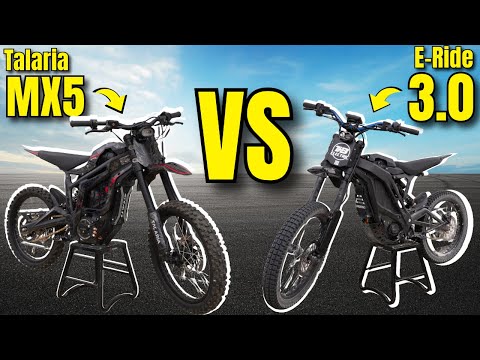
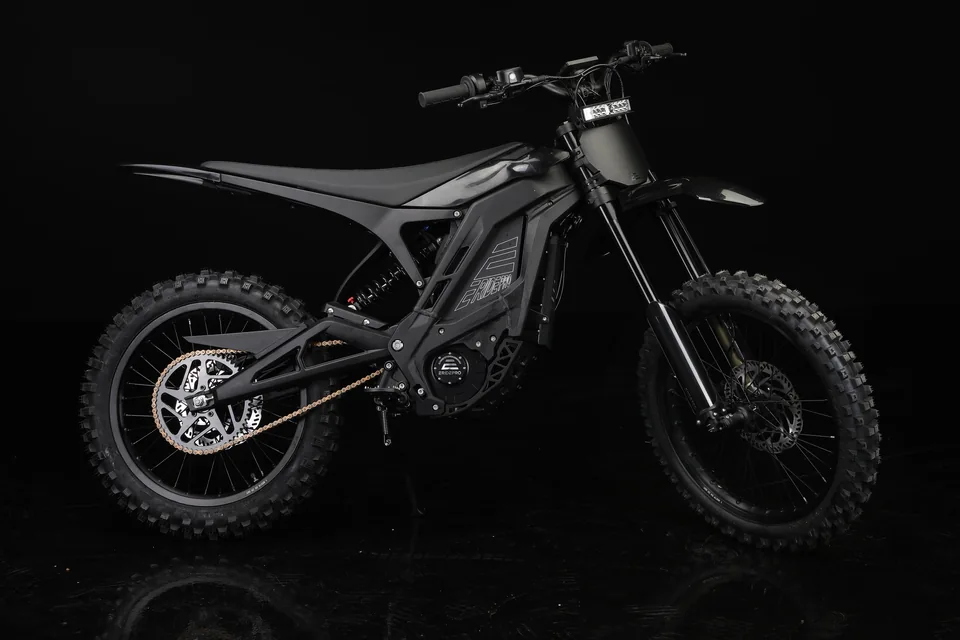
E-Ride Pro SS 3.0 VS Talaria Sting MX5
This video compares the SS 3.0 and Talaria MX5. It is not a test of the Pro SR against the TL5500 in our table.
Open on YouTube ↗The YouTube player loads only when requested. A direct link remains available if embedded playback is restricted.